
Here’s the reality: Greece isn’t just sun, olives, and historic ruins. Its aging population is growing faster than most of Europe, and families increasingly need professional caregivers. But here’s the catch — it’s not enough to be skilled; Indian caregivers in Greece adapting to Greek culture are the ones who succeed because they understand the rhythm of Greek life.
Think about it: mealtimes, family hierarchies, daily routines, even social interactions are deeply influenced by culture. Jumping in without cultural insight can lead to misunderstandings, stress for seniors, and a rocky start for caregivers. On the flip side, caregivers who grasp these nuances don’t just do the job — they become trusted members of the household, earn long-term contracts, and sometimes even influence care standards in local communities.
In this guide, we’ll break down the practical ways Indian caregivers can align with Greek culture, from language hacks and lifestyle rhythms to understanding emotional and social expectations. By the end, you’ll see that cultural adaptation isn’t just a nice-to-have — it’s the secret to thriving as a professional caregiver in Greece.
Understanding Greek Culture and Traditions
Greek Family Values
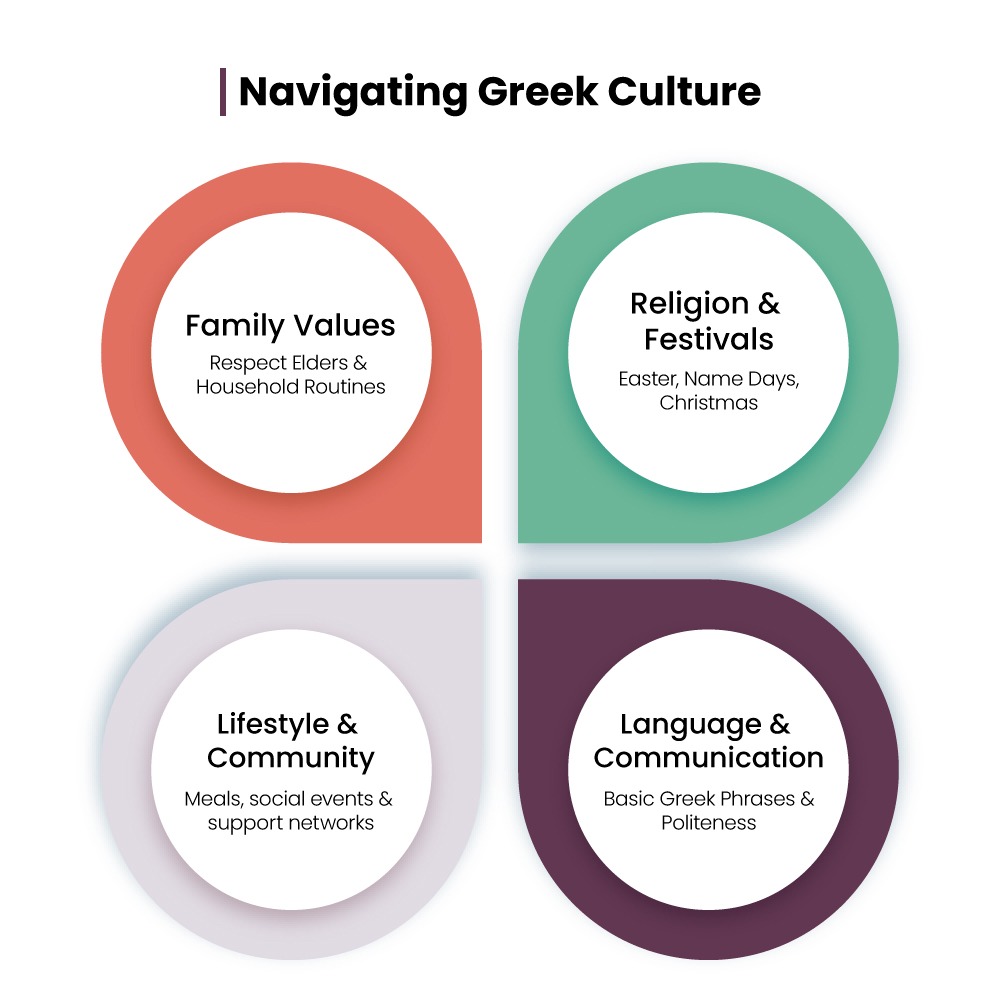
Family is central to Greek culture and traditions. Multiple generations often live together, and family ties influence daily life. For caregivers, recognising this dynamic is key: families expect involvement, respect, and seamless integration into household routines.
Tip: Take time to learn about the family’s history and preferences. A simple conversation about their daily routines can help build trust.
Religion and Festivals
Greece is predominantly Greek Orthodox, and religious practices shape many cultural events. Key celebrations include:
- Easter: The most important holiday, with extensive family gatherings and religious rituals.
- Name Days: Often more significant than birthdays, celebrating the saint associated with one’s name.
- Christmas and Epiphany: Include community and family-based customs.
Participating respectfully in these events can strengthen your relationship with the family and show cultural awareness.
Social Etiquette
Greek etiquette is warm and hospitable, yet structured:
- Greetings: A firm handshake with direct eye contact is standard. Among friends, a cheek kiss is common.
- Addressing people: Use titles and surnames in formal settings.
- Small talk: Discuss family, food, or local events. Avoid sensitive political topics.
Understanding these nuances ensures smooth interactions in both professional and social contexts.
Adapting to Daily Life in Greece
Language Skills
While English is widely spoken in urban areas, learning basic Greek phrases demonstrates respect and eases communication:
- Kalimera – Good morning
- Efcharisto – Thank you
- Parakalo – Please
Even basic effort can enhance rapport with both patients and colleagues.
Food and Dining Etiquette
Greek cuisine is a vital part of modern Greek culture. Meals are social events, and sharing food is common.
- Wait for the host: Always start eating when your host does; it shows respect and appreciation.
- Compliment the food: Praising the dishes and saying thank you makes a great impression and strengthens bonds.
- Try local dishes: Sampling moussaka, souvlaki, or spanakopita helps you connect with the culture and enjoy authentic experiences.
Lifestyle and Leisure
Greeks value a balanced lifestyle. Afternoon rests, family meals, and weekend gatherings are part of life. Respecting these routines shows cultural sensitivity and helps you integrate better.
Navigating the Greek Healthcare System
Understanding the Greek health system is essential for Indian caregivers. Greece provides both public and private healthcare services. The National Health Service (ESY) manages public hospitals and clinics, while private facilities offer additional options.
Key points:
- Registration:
Make sure you have a tax number and insurance before starting work in Greece. This keeps everything legal and gives you access to healthcare when needed.
- Primary Care:
Public hospitals have general doctors and specialists to help patients. Knowing where to go makes daily caregiving smoother.
- Patient Interaction:
Greek patients appreciate polite, clear communication. Being respectful and attentive helps you build trust quickly.
According to research on the Greek healthcare system, coordination between public and private sectors can affect caregiver workflows and patient experience.
Tip: Familiarise yourself with nearby hospitals and pharmacies to act confidently in emergencies.
Practical Tips for Indian Caregivers in Greece
Providing attentive and empathetic care in a new cultural setting requires understanding both the household and caregiving expectations. This involves recognising family routines, communicating clearly, and developing essential caregiving skills
1. Build Cultural Awareness
- Learn about local customs and traditions: Understanding Greek festivals, family dynamics, and everyday rituals helps you connect with the household and earn trust.
- Observe how families interact with elders: Noticing respectful gestures and routines around elderly family members ensures your care aligns with expectations.
- Attend community events when possible: Participating in local gatherings allows you to experience authentic culture and network with fellow caregivers.
2. Respect Work Protocols
- Follow schedules and routines strictly: Punctuality and consistency demonstrate professionalism and reassure families about your reliability.
- Document care procedures clearly: Maintaining accurate records of medication, appointments, and daily activities helps avoid misunderstandings and improves patient safety.
- Communicate proactively with family members: Regular updates about the care recipient’s health or behaviour show accountability and strengthen your working relationship.
Greek healthcare increasingly uses technology to support caregivers, from telehealth consultations to AI-assisted scheduling, which can help streamline daily routines and patient monitoring.
3. Engage with the Community
- Join local caregiver support groups: These groups provide emotional support, practical advice, and opportunities to share experiences with peers.
- Participate in cultural or language classes: Improving Greek language skills and cultural understanding boosts your confidence and efficiency in day-to-day tasks.
- Explore nearby markets, cafés, and cultural centres: Engaging with local life helps you feel at home and builds a deeper connection to your surroundings.
4. Self-Care and Adaptation
- Prioritise mental health and rest: Caregiving abroad can be stressful; scheduling downtime prevents burnout and keeps you effective.
- Connect with fellow Indian caregivers for support and advice: Sharing experiences, tips, and challenges with others in your community eases adjustment and reduces feelings of isolation.
Challenges Indian Caregivers Might Face Abroad
Adjusting to a new country comes with hurdles. Understanding the main caregiver challenges and strategies to handle them can make this transition smoother. Working abroad sounds exciting — but let’s be honest, it’s not always smooth sailing. Indian caregivers often encounter hurdles that go beyond language and distance. Understanding these challenges upfront can make the difference between struggling and thriving in a foreign care environment.
1. Language Barriers
- Difficulty in communication: Limited Greek language skills can lead to misunderstandings with patients, families, or healthcare professionals.
- Impact on care quality: Miscommunication about medication, routines, or needs may affect the effectiveness of your caregiving.
2. Cultural Misunderstandings
- Different household norms: Greek families may have routines, dietary habits, or etiquette that differ from what you’re used to.
- Adapting without offence: Misunderstanding these cultural cues can create tension, so observing and asking questions respectfully is key.
3. Homesickness and Isolation
- Emotional challenges: Being far from family and friends can lead to loneliness, affecting mental well-being.
- Building connections locally: Joining community groups, caregiver networks, or social activities can help reduce isolation and improve adjustment.
Insight: “Cultural adaptation is not a barrier; it’s a bridge to understanding and compassion.”
Adapting to life as a caregiver in a new country can be challenging, but having the right support makes all the difference. Grandmama provides practical guidance, training, and a community of fellow caregivers, helping you build confidence, navigate daily challenges, and enhance your skills while caring for others.”
FAQs On How Indian Caregivers Can Adapt to Greek Culture
Is Greek culture difficult to adapt to as an Indian caregiver?
With awareness and openness, adaptation is manageable. Respect for family values, religious practices, and social norms goes a long way.
Do I need formal qualifications to work in Greece as a caregiver?
Yes, most families and agencies require certification and experience. Familiarity with Greek healthcare protocols is an added advantage.
How can I handle cultural differences in caregiving practices?
Observe family routines, ask questions politely, and adjust your approach to align with Greek customs and traditions.
Are there local resources for Indian caregivers?
Yes. Community centres, cultural organisations, and online forums provide guidance, networking, and support.
What cultural challenges might Indian caregivers face in Greece?
Language barriers, differences in daily routines, food habits, and social etiquette can pose challenges. Awareness and open communication can ease the transition.
Are there platforms that help Indian caregivers find jobs in Greece?
Yes. Job portals, trusted recruitment agencies like Grandmama specialising in healthcare, and social media groups can help caregivers connect with families and agencies.
How can Indian caregivers adapt quickly to Greek culture?
Learning basic Greek phrases, understanding local customs, engaging with the Indian community, and observing family expectations can accelerate adaptation.
What legal or visa requirements should Indian caregivers be aware of?
Caregivers typically need a work visa, valid passport, and sometimes recognised certifications. It’s important to check Greek immigration laws and employer requirements before applying.
Thriving as an Indian Caregiver in Greece
Adapting to Greek culture requires awareness, empathy, and openness. By learning local customs, respecting traditions, and engaging with families, Indian caregivers can provide excellent care and enjoy a fulfilling experience abroad.
With the right preparation, living and working in Greece can be a rewarding journey, offering personal growth and professional enrichment for Indian caregivers.
Make your experience as an Indian caregiver in Greece smoother and more rewarding—connect with Grandmama today for support, resources, and a community that understands your journey